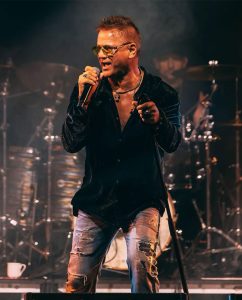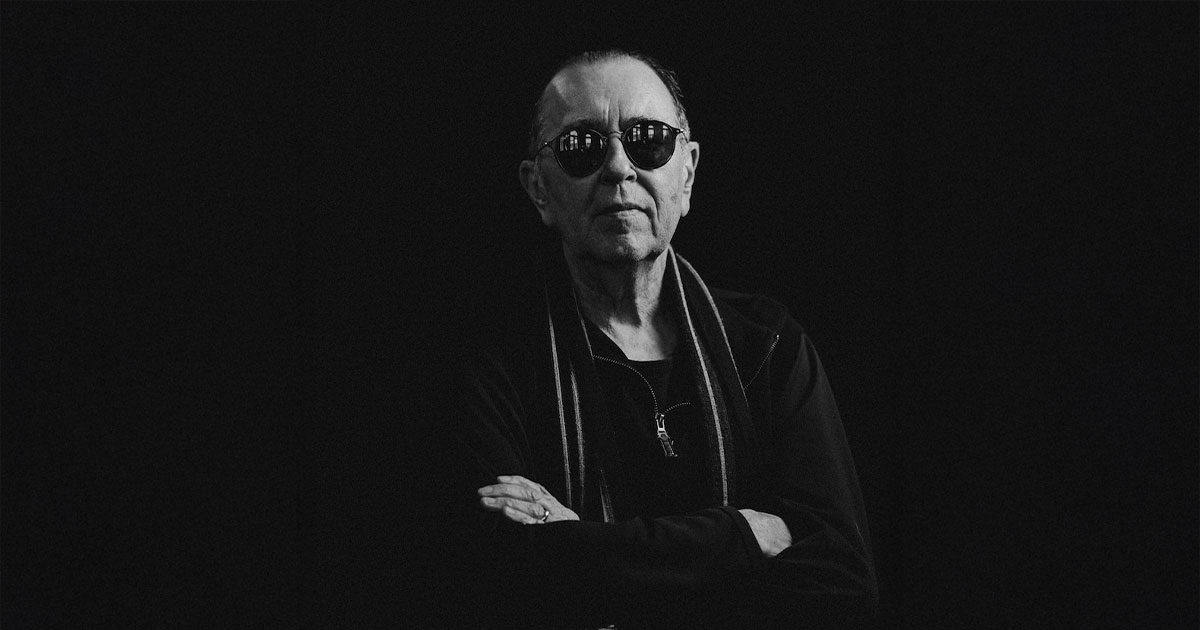
No discerning vinyl lover’s collection is complete without a copy of Pampered Menial, the 1975 prog-rock masterpiece by the Missouri group Pavlov’s Dog.
In the pre-internet era, the band and its acrobatic vocalist and principal songwriter David Surkamp were steeped in mystery. They had, after all, broken up after just two incredible albums. Was Surkamp even still alive?
Surkamp was indeed alive – happily married, a devoted father and working for his local newspaper as a music journalist. New Pavlov’s Dog albums appeared, as did unreleased ones. A triumphant reformation in 2004 would announce the return of Surkamp and Pavlov’s Dog as a creative force.
And now, 50 years since the release of the landmark album Pampered Menial, Pavlov’s Dog will make their very first trip to Australia next month.
Surkamp spoke to Nick Milligan about the passing of the years, his enduring creative drive, new Pavlov’s Dog music, his friendship with Blue Oyster Cult, his famously high voice, interviewing Michael Hutchence and how he came to make one of the greatest records of the 1970s.
NM: I’ve been listening to your music for over 35 years. My dad used to play Pampered Menial on high rotation in the car when I was very young. So that album, in particular, is deeply ingrained in my consciousness. It’s surreal to be talking to you now.
DS: I’ll be 73 on Friday.
NM: Wow, that’s incredible. A lot of time has passed.
DS: Well, 50 years they say…
NM: And that’s the catalyst for this tour – 50 years since the release of Pampered Menial. This will be your first Australian tour. Have there been opportunities over the years?
DS: We tried. I was there [in Oz] about 40 years ago. Columbia gave me a platinum record for Pampered Menial. I did an interview on the radio and Harry Vanda and George Young called me from Albert Studios.
NM: Wow.
DS: I spent the afternoon with them and they were childhood heroes. The very first 45 I ever had was Friday on my Mind. And in ‘76 or ‘77, right before I quit the band the first time, there was a promoter that wanted to bring us down to Australia for a tour. It wound up being down to us and Gloria Gaynor, and he went with Gloria Gaynor. That’s how close I got.
NM: Maybe he could have brought you both? Double headliner.
DS: Can you imagine? Oh my God.
NM: Have you always sensed a fan base here?
DS: Oh yeah, definitely. We knew. Honestly, I love playing. You get in front of people. I’ve never had an issue with it. I guess it’s just really expensive to get there.
NM: It’s Pampered Menial on the poster for the tour – 50 years since that record came out. Will it be a Pampered Menial-heavy set list or, because it’s your first tour, will you try to play a breadth of all the records?
DS: We always play most or all of Pampered Menial, just because I don’t want to get lynched. But we had our last rehearsal yesterday and we’re going to do some dates next week in Europe. And we absolutely hate rehearsing. But we included something from Prodigal Dreamers, something from the Siegfried record [Has Anyone Here Seen Siegfred?], something from Lost in America. I think we hit ’em all a little bit, you know? A bunch of stuff from At the Sound of the Bell. We did ‘She Came Shining’.
NM: Can you tell me about the current lineup of the band?
DS: Our principal soloist is Abbie Steiling [violin, mandolin]. Her husband’s been in the band 16 or 17 years. He’s the bass player. Until recently my wife was on stage every night. But we were doing a show two or three years ago in Europe and she fell and had a severe brain injury. She can no longer perform. But we’re a really stable line-up. The original band barely made it three years. All things considered I’m much happier this way. And most of the original guys are dead.

NM: And not just anyone could play in Pavlov’s Dog.
DS: I have a high standard of musicianship. The deal is if you want to play in Pavlov’s Dog, everybody expects you can play, you know? Then it’s just a case if you’re too big an asshole to hang out with on a tour bus.
NM: It’s been 50 years since you recorded that first album at CBS studios in New York City. Does it feel like 50 years have passed since then? And what are your strongest memories of making that debut album?
DS: Life goes by pretty quickly. I’ve been married to my wife 35 years. That went by way too fast. My daughter is 33. My son’s nearly 40.
We recorded at Columbia Studios in New York City in the winter. It’s in the big room where Dylan cut Highway 61, and Miles Davis and Laura Nyro – you name it, they all recorded in that big room. It’s big enough for an orchestra. We had two keyboard players and two guitars. I mean, we had two of everything.
It seemed like we needed a big room and Sandy Perlman [producer] was just masterful. He helped me a lot. I was only three or four years younger [than the other members]. Rick Stockton and I were the two youngest. We went to high school together and everybody else was three or four years older than us.
That doesn’t make any difference now but, when you’re 21 or 22 that’s a pretty big jump. Siegfried [Carver, violin] especially, was much more mature than me. Much more well-read.
But I wrote songs and they didn’t, so there you go.
NM: It is such an assured debut. It’s a masterpiece.
DS: Thank you.
NM: You’d been in a band called High on a Small Hill before Pavlov’s Dog and obviously some of the songs from that project did make it into Pavlov’s, like ‘Episode’.
DS: ‘Episode’, yeah. I couldn’t have been more than 18 when I wrote ‘Episode’. High On a Small Hill was me and Rick.
NM: Did you have a clear idea of how you wanted Pampered Menial to sound before you recorded it?
DS: We sounded exactly like that when we played live. In fact, a lot of bands wouldn’t let us open for them, or they wouldn’t open for us. Kiss wouldn’t. Aerosmith kicked us off a tour after two days. ‘Cause if they had a bad night, it wouldn’t have gone down well.
There were some bands that were very self-assured that didn’t mind at all. Jefferson Starship, Nektar, Electric Light Orchestra. We had bands like Heart and Bob Seger opening for us too. It was a different time, different place.
NM: Given your vocal range, there’s some acrobatic vocals on Pampered Menial.
DS: I was showing off, yeah.
NM: But from the next album onward, it seemed like you reigned that in. What was your perception of your voice and how it could be used in songwriting?
DS: The reason that I sang so high on the first record was, coming up, we didn’t have very good gear. There was no such thing as monitors. Hell, there was no such thing as side fills. Forget monitors. We never saw a monitor. So we were loud. I gotta tell you, you haven’t lived till you’ve had a mellotron coming at your head at 110dB. That’s a singular experience. And I found to get over two keyboard players, copious Marshall stacks… Siegfried had a Coliseum P.A. head for his violin – I mean, it was freaking loud. And the only way to get over that din was to go as high as I could. Like at the end of ‘Subway Sue’ I hit a B below High C. And was that necessary? Of course not but, you know, I just got into doing it. I still sing everything in the original key. Because I wrote it for me.
If Sandy Perlman had gone, “No, David!”, that would’ve been all right with me (laughs). But it was a singular set of performances.
NM: It would’ve helped you stand out too.
DS: It did.

NM: How old were you when you realised that you had that octave range?
DS: High school. High On a Small Hill was basically the end of high school.
I wasn’t in a lot of bands growing up. I came out of the folk scene of the early ‘60s. My dad was a big jazz fan and my mom listened to what we consider classic country music now. The George Jones, Faron Youngs of the world, the good stuff. I had an acoustic guitar when I could walk, basically – I played guitar my whole life. And mandolin – you know, they were always around. My dad had an organ and a piano in the living room. I was always writing songs and by high school I realised if I was gonna hear my songs, I had to be in a band so, ergo, buy a Fender Telecaster and a Vox Phantom.
NM: Did your parents play music as well?
DS: My dad only knew two or three songs and he played ’em every morning before he went to work. He was a mortgage banker. One was ‘Stardust’. So you know where he was coming from. But he couldn’t really play.
NM: I wanted to ask you about the unreleased third album which came out just under a decade ago now, Has Anyone Here Seen Siegfried?. It’s such an incredible record. It was originally shelved because you left the band. You said in another interview this was because you felt the label was trying to mould you into something that you didn’t want to be.
DS: Everything was becoming corporate. It was about the time the Boston album came out. And I sort of loathed that whole thing, you know? I could never have been Foreigner or one of those bands. I didn’t like it. And really after the second album everybody in the band decided they were songwriters. None of them actually had the ability to write a song.
Ergo, I told the management record company I was gonna quit my band. Which they thought was insane, but my manager said, “Well, you owe them a third album.” So I wrote that Siegfried record, the third album, in two weeks because the other guys made demos and sent them to Columbia Records. And Columbia was like, “What is this crap? This is not what we paid for. We We want good songs.” So I erased a bunch of the guitars off the original tracks and got my friend Elliot Randall and his friend Jeff Baxter to play guitar. It’s the Steely Dan guys on that third record, basically.
NM: Wow, I didn’t realise that. I’m a big Steely Dan fan.
DS: Now when you listen to those solos you’ll be able to tell who’s Skunk Baxter and who’s Elliott Randall. Because they don’t play the same at all.
NM: So you walking away from the release of that record didn’t reflect your opinion of that third album? You believed in the album, musically?
DS: Yeah, it was fine. And ‘Only You’ was supposed to be on the second record, but there wasn’t enough room on the vinyl. We had 20, 22 minutes a side or something. So it literally wouldn’t fit and was left over. So that was one less song for me to write.
NM: Back then you had a connection to Blue Oyster Cult and their producers [Sandy Perlman and Murray Krugman] produced your albums as well. What was your relationship like with BOC? Because you’re musically different in lots of ways, but perhaps share an affinity for unconventionality in songwriting? Was there any kind of friendly rivalry between you? Pampered Menial came out in ’75 and Agents of Fortune in ‘76.
DS: Not at all. I was friends with Donald – well, they call him Buck Dharma. But I was friends with Donald and Eric [Bloom] for sure. And Albert [Bouchard], the drummer. We were all pals. And there was literally no rivalry. I mean, I couldn’t play guitar as good as Donald Roeser on my best day back then (laughs). I mean, I don’t know if I can now. He’s a brilliant soloist. And the sweetest guy in the world.
NM: And you still write music every day?
DS: Pretty much, yeah. I’m in my living room. I have my piano over there. I have a Telecaster behind me and I have a Guild acoustic across the room. So I’m perfectly happy in this environment.
NM: Not all songwriters maintain the passion as much as you clearly have. Why do you still write songs?
DS: I was a sickly kid growing up. I had asthma and stuff. And I’ve just always been really solitary. Even if I couldn’t breathe, I could sit and strum a mandolin or an acoustic guitar or sit wheezing on a piano bench.
NM: You must have overcome your asthma to be able to sing the way you do and sustain those notes?
DS: No, I still have an inhaler on me at all times. It’s never gone away. Y
NM: Is there more Pavlov’s Dog songs written somewhere that might see the light of day?
DS: There’s a new record coming out in September. We’re doing a song [on the tour] called ‘Wanderlust’. When I say I touch on every record, I mean I touch on every record. Whether we need to or not (laughs).
NM: Are there any plans beyond the Australian tour? With the new album coming out, you don’t seem like slowing down.
DS: No, I’m gonna go as long as I can, as long as I’m physically able. I think it’s really important.

NM: When you came back to Pavlov’s Dog after that original hiatus [in 1990 for the Lost in America record and again in 2004], what was that return like? Did you come back to the stage because you sensed there was still great interest in the band?
DS: Well, Sarah [wife] and I had our daughter. Right about the time Lost in America came out. So that was kind of a false start. But I’ve been on the road basically since I was 18. So I was in my late thirties, you know. I just decided that I’d like to see my daughter grow up.
So I worked as a journalist for the Pulitzer Publishing Company. They own the big newspaper in St. Louis [Missouri]. I did thousands of interviews like what you’re doing right now. I lost track, you know. And Sarah and I would play as a duo just around here. Or occasionally we went to Italy and did some TV stuff. But generally it was just the two of us until I decided it was time. Sarah was old enough. So we reformed and it’s been 20 years or more.
NM: When you worked as a journalist, were you writing about music and entertainment?
DS: That’s all I did. Actually, I interviewed Michael Hutchence. And he goes, “Are you that David Surkamp? And I said, “Yeah, I think I’m the only one.” And he started interviewing me. I had to kind of steer him back the right way.
NM: That must have happened more than once, surely?
DS: Yeah, it happened a lot.
NM: Michael Hutchence is one of our greats.
DS: He was such a kind guy. He was a real sweetheart.
NM: You mentioned the Lost in America album. I wanted to ask you about the production of that record. Of all the albums you’ve made, it is the record that has that distinctly ‘80s sound. Were you influenced by ‘80s production at that point?
DS: No, that wasn’t me. That was totally Douglas [Rayburn]. That was Douglas’s record. We wrote everything together, the entire record, the two of us. And he produced it, for the most part. And yes, he wanted gated drums and he wanted synthesisers. That was the first time I played all the guitars. It’s the only record I’ve made that sounds dated.
It was not my preference, but Douglas had to get a shot. I’m glad we did it before he passed.
NM: What can you tell me about the new record?
DS: A friend of mine who I went to high school with said, “It reminds me of At the Sound of the Bell.” That ‘She Came Shining’, ‘Valkerie’ [sound]. A lot of orchestration that Abbie Steiling wrote. And we used real strings. It’s got tonnes of guitars and tonnes of keyboards.
NM: In other words, it’s a Pavlov’s Dog record.
DS: It sounds exactly like Pavlov’s Dog.
Pavlov’s Dog play Sydney’s Factory Theatre on Friday, October 17, 2025. Tickets on sale now. New singles ‘Jet Black Cadillac’ and ‘Another Blood Moon’ are out now.